May 10, 2023
Fiction
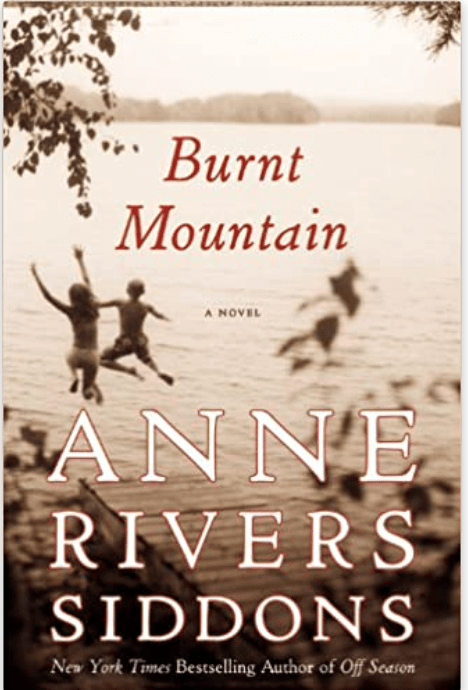
From one of our most acclaimed writers comes this dramatic tale of a well-born Southern woman whose life is forever changed by the betrayal of her mother and by the man she loves.
Growing up, the only place tomboy Thayer Wentworth felt at home was at her summer camp – Camp Sherwood Forest in the North Carolina Mountains. It was there that she came alive and where she met Nick Abrams, her first love…and first heartbreak. Years later, Thayer marries Aengus, an Irish professor, and they move into her deceased grandmother’s house in Atlanta, only miles from Camp Edgewood on Burnt Mountain where her father died years ago in a car accident. There, Aengus and Thayer lead quiet and happy lives until Aengus is invited up to the camp to tell old Irish tales to the campers. As Aengus spends less time at home and becomes more distant, Thayer must confront dark secrets-about her mother, her first love, and, most devastating of all, her husband.
Nonfiction
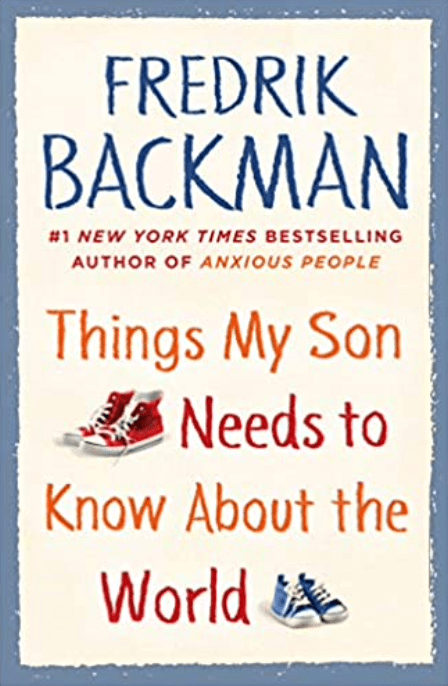
As he conveys his profound awe at experiencing all the “firsts” that fill him with wonder and catch him completely unprepared, Fredrik Backman doesn’t shy away from revealing his own false steps and fatherly flaws, tackling issues both great and small, from masculinity and mid-life crises to practical jokes and poop.
In between the sleep-deprived lows and wonderful highs, Backman takes a step back to share the true story of falling in love with a woman who is his complete opposite, and learning to live a life that revolves around the people you care about unconditionally. Alternating between humorous side notes and longer essays offering his son advice as he grows up and ventures out into the world, Backman relays the big and small lessons in life, including:An irresistible and moving collection of heartfelt, humorous essays about fatherhood, providing Backman’s newborn son with the perspective and tools he’ll need to make his way in the world.
April 12, 2023
Fiction
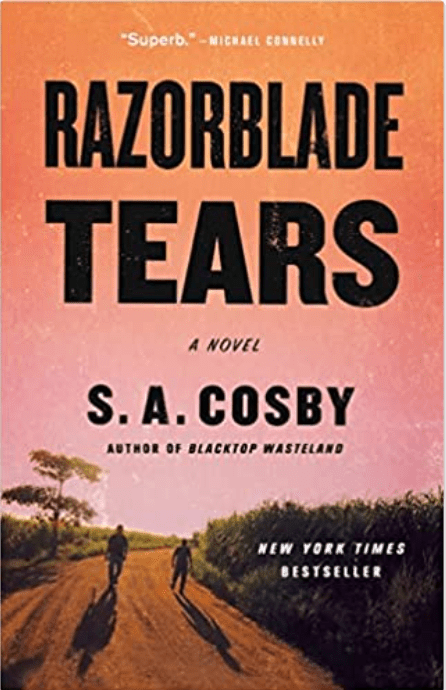
It’s hard to make a name for yourself in crime fiction but once you have, everyone knows it — for starters, your name appears on the covers of your novels in letters that are larger than the titles. Picture any Sara Paretsky or Lee Child book: They typically feature the author’s name in an enormous point size with the title in smaller letters underneath, usually above a generic and largely interchangeable image. (“Close-up fingerprint” and “man in cross hairs” are popular choices.)
S. A. Cosby is not yet in the name-bigger-than-the-title territory but he’s headed that way in a hurry. His most recent novel, “Blacktop Wasteland,” about a reluctant getaway driver drawn into one last score that goes violently awry, won a Los Angeles Times Book Prize and was named a New York Times Notable Book of the year. What caught people’s attention was not the off-the-rack premise but the bespoke execution: Cosby’s prose is vibrant and inventive, his action exuberant and relentless. He also planted a noir-colored flag in the underexplored territory of poor rural Black Virginia, where the lines being crossed have less to do with legality and illegality than with getting by or getting plowed under by a system that never lets you catch your breath.

Nonfiction
An American epic of science, politics, race, honor, high society, and the Mississippi River, Rising Tide tells the riveting and nearly forgotten story of the Great Mississippi Flood of 1927. The river inundated the homes of almost one million people, helped elect Huey Long governor and made Herbert Hoover president, drove hundreds of thousands of African Americans north, and transformed American society and politics forever.
The flood brought with it a human storm: white and black collided, honor and money collided, regional and national powers collided. New Orleans’s elite used their power to divert the flood to those without political connections, power, or wealth, while causing Black sharecroppers to abandon their land to flee up north. The states were unprepared for this disaster and failed to support the Black community. The racial divides only widened when a white officer killed a Black man for refusing to return to work on levee repairs after a sleepless night of work.
In the powerful prose of Rising Tide, John M. Barry removes any remaining veil that there had been equality in the South. This flood not only left millions of people ruined, but further emphasized the racial inequality that have continued even to this day.
March 8, 2023
Fiction
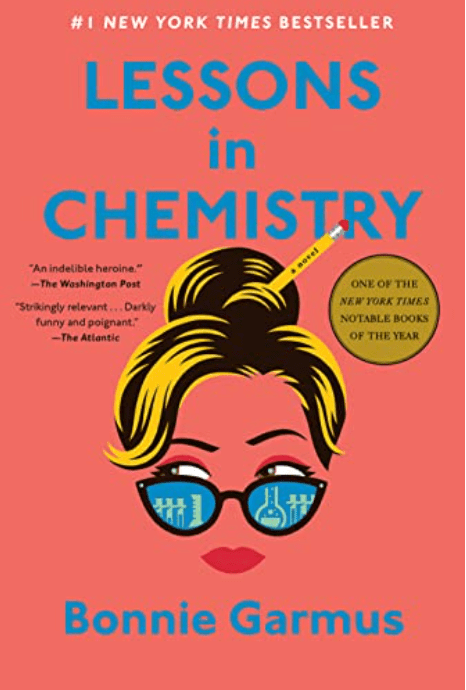
Like Laura Ingalls Wilder and Judith Krantz, Bonnie Garmus is a latecomer to the literary scene. This week she publishes her first book — the sparkling novel “Lessons in Chemistry” — days shy of her 65th birthday.Hurray for this! If we’re going to continually fuss over newly minted MFA wunderkinds landing two-book deals, let us also raise a glass — or, better yet, Garmus’s book — in honor of this rarer breed of first-time novelists.
With “Lessons in Chemistry,” Garmus, a venerable copywriter and creative director, delivers an assured voice, an indelible heroine and several love stories — that of a mother for her daughter, a woman for science, a dog for a child, and between a woman and man.

Nonfiction
Whenever men in power bemoan the changing role of women in America, it’s those good old days they’re missing. Surely the careers of these four women fueled the nostalgic longings of such men, bless their hearts. They are the stars of Lisa Napoli’s new book, “Susan, Linda, Nina & Cokie: The Extraordinary Story of the Founding Mothers of NPR.”
The book begins with the early life story of each woman and grows into an abridged history of National Public Radio as Napoli weaves their careers into it. She chronicles NPR’s chaotic origins and later its dramatic financial rescue after the ouster of President Frank Mankiewicz, “the man who brought NPR to prominence — and then nearly killed it.”
February 8, 2023

Fiction
In the new book version, Nikole Hannah-Jones, the Times journalist who conceived of the overall effort and wrote its lead magazine essay, offers a few interpretations. In the preface, she cautions that the project is “not the only origin story of this country — there must be many.” Then, in the opening chapter, Hannah-Jones repeats the text of her original magazine essay and refers to Black Americans as the country’s “true ‘founding fathers,’” as deserving of that designation “as those men cast in alabaster in the nation’s capital.” Some 400-plus pages later, in a concluding chapter, she writes that the origin story in the 1619 Project is “truer” than the one we’ve known.
& Nonfiction
What began as Pulitzer prize-winning journalism in the New York Times in 2019, and was later expanded into a book and a podcast, has made its final transformation into an audiobook. A collection of essays, poems and fictional works by more than 50 writers, The 1619 Project is a remarkable reframing of American history in which slavery and the Black experience are at the heart of the narrative. It traces the birth of a nation not to 1776 and the American revolution but to August 1619, when a ship arrived at Point Comfort in Virginia carrying a cargo of between 20 and 30 African captives, beginning a system of chattel slavery that would continue for 250 years.
January 11, 2023
Fiction
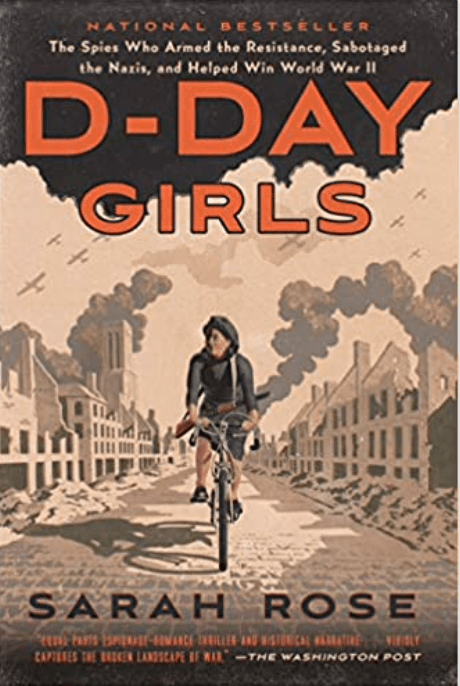
The dramatic, untold true story of the extraordinary women recruited by Britain’s elite spy agency to sabotage the Nazis and pave the way for Allied victory in World War II.
In 1942, the Allies were losing, Germany seemed unstoppable, and every able man in England was fighting. Churchill believed Britain was locked in an existential battle and created a secret agency, the Special Operations Executive (SOE), whose spies were trained in everything from demolition to sharp-shooting. Their job, he declared, was “to set Europe ablaze!” But with most men on the frontlines, the SOE did something unprecedented: it recruited women. Thirty-nine women answered the call, leaving their lives and families to become saboteurs in France. Half were caught, and a third did not make it home alive.

Nonfiction
In Undelivered, speechwriter Jeff Nussbaum presents some of the most notable speeches never heard, from Richard Nixon’s refusal to resign the presidency to Hillary Clinton’s 2016 acceptance of it; from Dwight Eisenhower’s apology for the failure of the D-Day invasion, to Emperor Hirohito’s apology for his role in World War II.
Examining the content of these speeches and the context of the historic moments that almost came to be, Nussbaum considers not only what they tell us about the past, but also how they can inform our present
December 14, 2022

Fiction
In Beartown, where the people are as “tough as the forest, as hard as the ice,” the star player on the beloved hockey team is accused of rape, and the town turns upon itself.
Swedish novelist Backman’s (A Man Called Ove, 2014, etc.) story quickly becomes a rich exploration of the culture of hockey, a sport whose acolytes see it as a violent liturgy on ice.

Nonfiction
It was while working on her sweeping, Pulitzer prize-winning first book, The Warmth of Other Suns, a history of African Americans’ great migration out of the South, that Wilkerson realised she was studying a deeply ingrained caste system that had been in place longer than the nation itself had existed, dating back to colonial Virginia. In Caste, Wilkerson sets out to understand American hierarchy, which she compares with two of the best known caste systems in the world: that of India, the very birthplace of caste, and of Nazi Germany, where caste as a modern experiment in barbarism was ultimately vanquished.
November 9, 2022

Fiction
A longtime fixture at University of California, Berkeley he penned works of history, biography, place names, ecology, the western landscape as well as a few works of fiction, such as “Storm.” In that story — considered the first ecological novel — Stewart names the fearsome tempest “Maria,” which he pronounced Ma-Rye-a. The tale inspired the National Weather Service beginning in 1953 to give names to catastrophic weather events, such as Hurricane Sandy. Among Stewart’s friends were illustrious literati such as Wallace Stegner, Carl Sandburg, Robert Frost and Civil War historian Bruce Catton.
Stewart made only one foray into the realm of science fiction: “Earth Abides.” It was published in 1949. Over the years it has achieved cult status and has never gone out of print.
Nonfiction
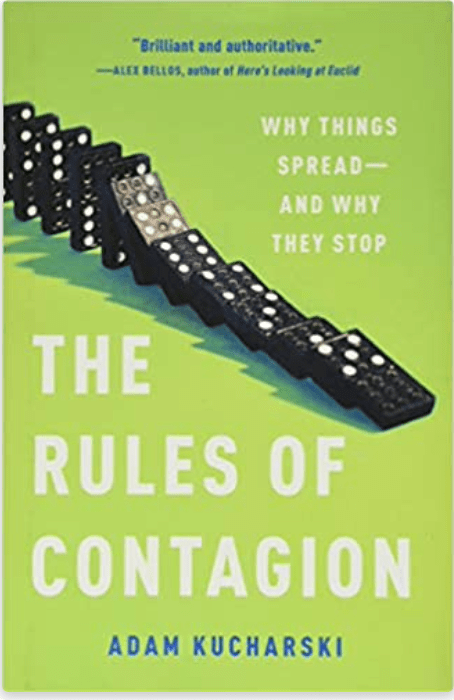
The Rules of Contagion: Why Things Spread – and Why They Stop uncovers the underlying principles that drive contagion, from infectious diseases and online misinformation to gun violence and financial crises. It explains what makes things spread, why outbreaks look like they do, and how we can change what happens in future.
 Wrenaissance Readers